26 October 2026
Calibrating hyperspectral UAV flights for consistent disease readings all season
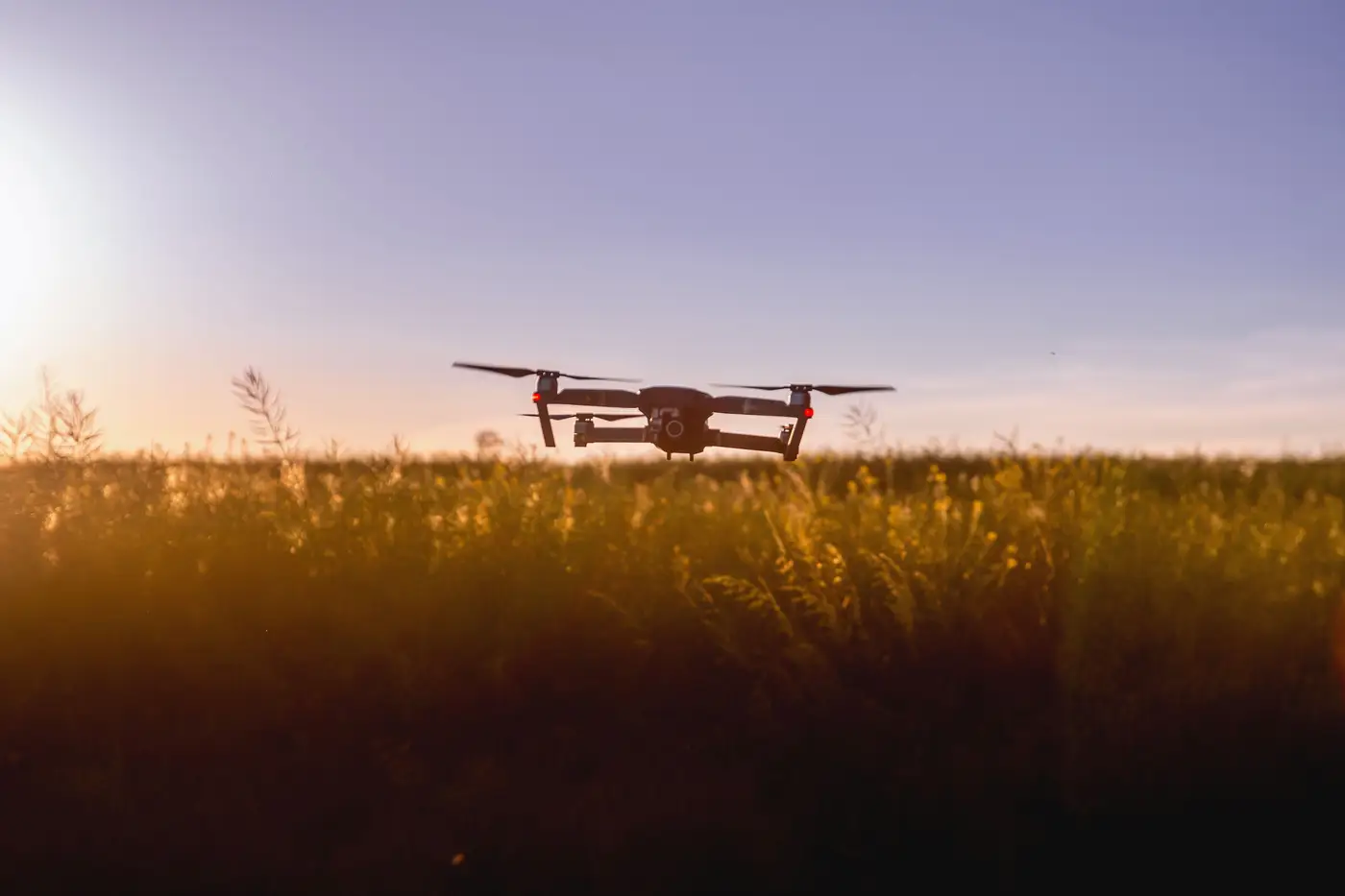
If you've ever pulled two flights from the same trial block three weeks apart and watched a healthy plot suddenly read 8% lower reflectance in the red edge, you already know why calibration matters more than the sensor spec sheet. A hyperspectral camera will happily hand you a clean, repeatable number that means nothing, because the light hitting the canopy changed, the panel degraded, or the flight geometry shifted. None of that shows up as "noise" in the data. It shows up as a false signal that looks exactly like early disease stress.
Across a trial season that's the real risk. One flight on its own can look fine. It's the week-over-week comparison that falls apart if your calibration routine isn't locked down from the first flight to the last.
Why radiometric drift ruins week-to-week comparisons
Disease detection from spectral imagery runs on relative change: you're watching a plot's signature move away from its own baseline, or away from a healthy check strip, over successive weeks. That only works if a reading in week 4 means the same thing as a reading in week 10.
Several things break that comparison, flight to flight:
- Reflectance panel wear. Calibration panels pick up dust, UV yellowing, and scratches over a season. A panel that read true in May can be off by a few percent by August, and most teams never re-certify it mid-season.
- Sun angle and cloud cover. Flying at 10 a.m. one week and 1 p.m. the next changes the illumination geometry enough to shift canopy reflectance, especially in the SWIR bands disease signatures often rely on.
- Sensor dark current drift. Detector temperature changes flight to flight, and if the dark frame correction isn't re-run each time, you're baking a small, inconsistent offset into every pixel.
- BRDF effects from flight line direction. If you don't fly the same heading and overlap pattern each week, off-nadir angles pick up different canopy shadowing, which looks a lot like a stress signature if you're not watching for it.
Any one of these on its own is a rounding error. Stacked across a 12 to 16 week trial season, they add up to exactly the kind of drift that masks a real outbreak signal or, worse, manufactures a fake one.
A calibration routine that holds up over a full season
The fix isn't exotic. It's discipline, repeated the same way every single flight:
- Re-certify your reflectance panels before the season starts and spot-check them at the midpoint. A panel that's been in a truck bed for three months isn't the same panel you calibrated in the lab.
- Fly with an onboard downwelling irradiance sensor, not just a ground panel shot. Ground panels capture a single instant of light. A downwelling sensor logs irradiance continuously through the flight, which matters a lot on partly cloudy days when light changes between the first pass and the last.
- Lock your flight window. Same time of day, same sun elevation range, ideally within an hour of your baseline flight. If weather forces a shift, log it and flag that week's data for a manual review before you trust a week-over-week delta.
- Keep flight heading, altitude, and overlap identical across the season. Treat the flight plan like a fixed instrument setting, not something to re-optimize each trip.
- Run dark current correction and radiometric conversion to surface reflectance on every flight, not just the first one. It's tempting to reuse a correction from an earlier flight when you're pressed for time. Don't.
- Hold a known healthy reference plot in every flight. It gives you a built-in check: if the reference plot's signature drifts, the problem is your calibration, not the crop.
None of this requires new hardware. It requires treating calibration as a repeatable protocol, documented and followed the same way by whoever's flying, not something that gets improvised block by block.
Get this right and the spectral anomalies that show up week to week are the crop telling you something, not the sensor. That's the whole point of running a weekly, season-long early-warning workflow in the first place: the data only earns your trust once it's been calibrated the same way, every single flight, from first pass to last. If you're setting up a trial season and want a second set of eyes on your calibration approach before symptoms show up on the ground, Crop Disease Alert's early-access program is worth a look.