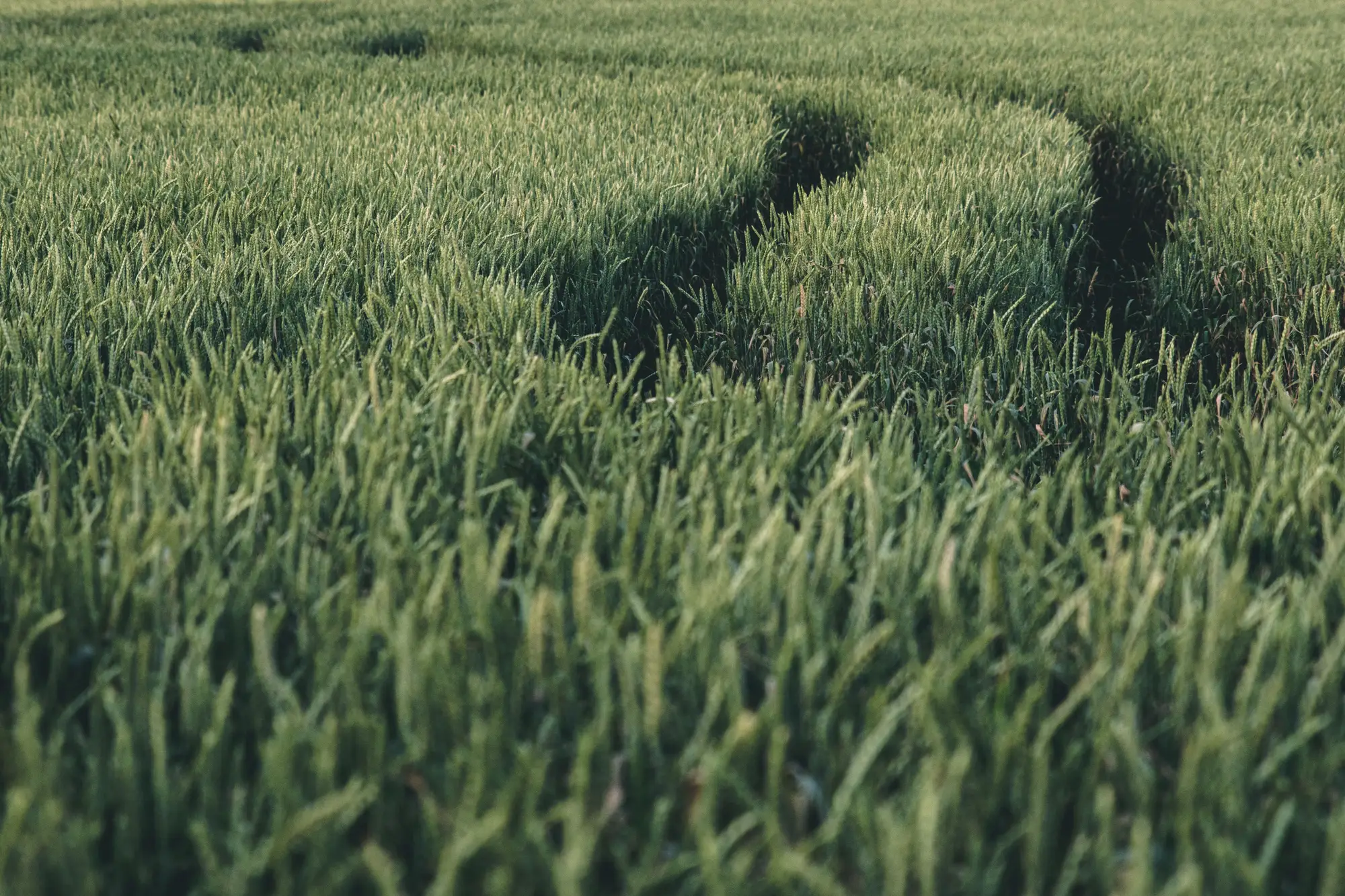
Weekly hyperspectral flights over your trial sites flag canopy that has started to depart from its own baseline, and follow how far it spreads. We are building this with a small early-access group.
How first disease gets found at a trial site today
You run efficacy trials across several sites, on natural infection. The protocol says when the first assessment goes in, and that date hangs on knowing disease has arrived. So a field scientist walks the blocks, or a contracted technician does, looking for first symptoms.
Each site gets a visit on a rota. A patch that starts the day after a visit sits there until the next one, and by then the untreated check has already moved on from where the plan assumed it would be. The sprays under test get read against the wrong starting line. Nobody notices until the report has to explain why the untreated plots did not behave.
The scouting walk is still the truth, and you will keep doing it. What it cannot do is cover every square metre of every plot every week. Crop Disease Alert flies the site each week, compares the canopy with its own earlier signature, and marks where it has started to differ. The crew still walks, but they walk to a flagged patch first.
02What you get
What arrives each week
We are building this with the early-access group, so the formats below are the shape we are working towards, and your trial protocol helps decide them.
2.1Anomaly flagNote per site
Where the canopy signature departs from the field's own baseline, and since which flight. Each flag carries the date of the pass it was first seen on.
2.2Spread noteWeek-on-week
How the footprint of a flagged patch moved between flights, set against known spread patterns for the crop. It says the patch grew, held or joined another one. It does not say which disease it is.
2.3Field sketchAnnotated outline
A hand-annotated outline of the trial site with the flagged zones circled and dated, made for the scouting crew to carry into the plots.
A sketch, not a real flight. How a flagged patch is circled and dated on a trial site outline.
03
How it works
1.
Send the trial sites
Boundaries for each trial site, ideally with the plot plan, so a flag can be tied to a plot or a block. Tell us the crop and the growth stages your assessments are keyed to.
2.
Weekly flights
A hyperspectral pass by drone or crewed aircraft over each site, on the weekly rhythm. The first flights set the baseline the later ones are compared with, so start them before the crop reaches the growth stage your first assessment is keyed to.
3.
Flag and track
Signatures that depart from that baseline are flagged, and the flagged footprint is followed from flight to flight.
4.
Note to your desk
An annotated note and field sketch for each site, ahead of the scouting walk. Your crew ground-truths what is under the circle.
04
Where it fits
Before the scouting walk. It narrows which blocks a field scientist walks first. Ground-truth still confirms what the anomaly is.
Setting assessment timing. A dated first flag gives you something to set beside the protocol's first assessment, and a reason to bring a site forward for a look.
05
Limits
These are the ways an early-warning note can mislead you, and what to keep in mind when you read one.
Anomaly, not diagnosis
A spectral anomaly can come from disease, drought, nutrient shortfall, compaction or a sprayer skip. The note flags where the canopy differs. Naming the pathogen takes someone walking to it.
Weekly, not live
The rhythm follows the flight schedule. It is a warning that lands once a week at best, and it is not an instant notification.
Daylight and clear sky
Hyperspectral capture needs daylight and low cloud, like any optical pass. A flight can slip to the next window, and that week's note says so.
Under 10 cm is the floor
At that pixel size a patch a metre across is about ten pixels wide, so it can be flagged. A single lesion on a single leaf cannot be seen. What the sensor reads is canopy.
Baseline takes flights
Anomalies are read against the site's own earlier flights, so the first weeks build the baseline and flag little.
No detection-speed promise
We make no promise about how many days ahead of symptoms a flag lands. That is the thing the early-access work is meant to find out with you, on your sites.
06
Who it's for
Who it's for
R&D field trials leads and trials managers at agrochemical firms who run disease efficacy trials across several sites.
Teams willing to compare each flag with their own scouting and scoring, and to tell us where it was wrong.
Who it's not for
Teams after a finished alert product today. This is early access.
Pathogen identification. That needs samples, a lab or an experienced eye on the plot.
Instant notification. The rhythm is weekly.
Commercial growers wanting spray decisions for their own fields.
07FAQ
Questions from trials teams
Q1Does this name the disease or pest?
No. It flags an anomalous signature and follows its spread. Your crew confirms what it is on the ground.
Q2Is this available today?
It is early access. We are running it with a small group of partners while it matures, and it is not a shipped alert product.
Q3How fast is the warning?
Weekly, tied to the flight schedule. It is not real-time.
Q4What about weather?
Hyperspectral capture needs daylight and low cloud. When a flight slips, the note for that week says it was missed, and the flag waits for the next window.
Q5Can we check it against our own scoring?
Yes, and we would want you to. Each flag is dated and located, so it can be set beside your scouting notes and your assessment scores for the same plots. Tell us where your ground-truth lives when you join.
Q6Will it fit our trial layout?
Send the site boundaries and the plot plan, and flags can be tied to plots and blocks. Formats are agreed with the early-access group.
Q7What crops does it cover?
That is one of the things early access settles. Tell us the crop and the growth stages your assessments are keyed to, and we will say whether we can read it this season or whether it should wait for the next one.
Q8Does it replace the scouting walk?
No. It points the walk at the blocks that changed since the last flight. Your crew still walks to the patch, still scores the plots, and still owns the call on what is growing there.
Q9Who owns the imagery and the notes?
Rights to the notes and any imagery are written into the agreement before flights start.
Q10How is it priced?
Early access is scoped per group of sites. Cost is set after we know the crop, the number of sites and the season, and you get it in writing.
Join the early-access list.
Tell us the crop and the number of trial sites, and we will tell you whether the season fits.